
What is it:
Emergency medicine doctors can be either general physicians or surgeons. These doctors work in a hospital’s emergency room and specialize in patients who are seriously ill or have just suffered previous trauma. Some emergency cases are simple and can be done out-patient, meaning the patient will not have to stay in the hospital overnight. However, some cases that emergency medicine doctors are presented with will require further hospitalization.
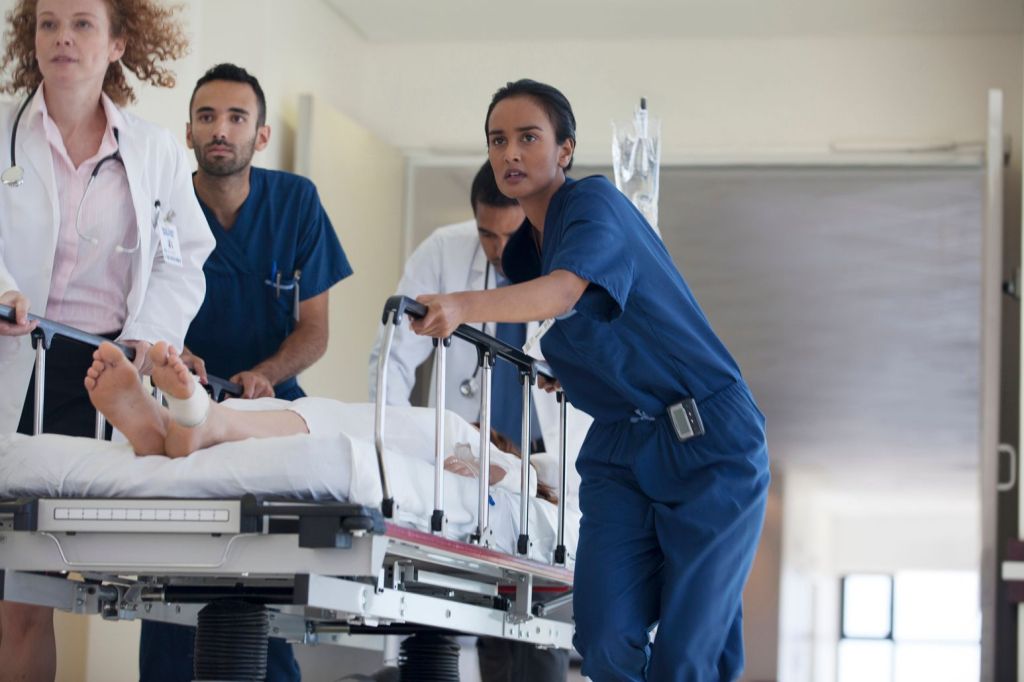
The main focus of emergency physicians is to stabilize the patient as quickly as possible to ensure the best possible outcomes. This field of medicine is one of them, when not the, most hectic there is. Sometimes you will have to deal with several patients at once, who all might be in critical condition.
Unlike other medical specialties, emergency medicine doctors are trained to not only treat patients of all ages but also be able to treat any injury no matter what specialty it falls under. If it is a more complex case, an emergency medicine will call for a consultation (for example a severe head injury will require a neurosurgery consultation). Yet, emergency physicians treat any illness, at any stage. As mentioned, they often handle multiple cases at the same time. They organize their patients with a “tier system,” where the most critical condition patients receive top priority.
Trauma vs Emergency:
Even though trauma surgeons and emergency doctors are often mistaken, there is a significant difference. You see, emergency doctors treat all types of patients, from the second that they enter the ER. Trauma surgeons, however, are not always found in the ER and they only treat emergency patients when they fall into specific categories. This includes when a patient is presented with low blood pressure, or if they need emergency surgery to save their life or to prevent life-long injuries or conditions. Also if the patient needs further hospitalisation, the emeregency doctor might admit them, but the trauma surgeon is the one that will follow up on them and assume primary responsibility.
Another difference between trauma surgeons and emergency physicians is the contact to patients. The role of an ER doctor is to receive the patient and stabilise them as fast as possible. They treat immediate injuries. Trauma surgeons follow through with the patient, right up until discharge. Dr. Brant Putnam, Trauma Surgeon says “I guess it’s really the commitment to taking care of a severely injured patient from the time of arrival through their need for surgery and acute hospitalization that is what makes a trauma surgeon different from an emergency room physician.”
So emergency medicine focuses more on the actual medical aspect of intensive care while trauma surgeons focus more on the patient care. Some emergency physicians are also surgeons- this varies depending on education.
Duties and expectations
The chief responisbilities you will have as an emergency medicine physican will be to treat any patient that enters the ER. But what does that include?
- Examining patients
- Emergency resuscitation
- Placing intravenous lines
- Stabilizing the patient however possible
- Determining if patients need to be admitted to the hospital
- Thorough documentation
The list above is just a very brief summary of what is expected of an emergency medicine physician. As briefly mentionned, this specialty requires thorough knowledge of all body parts and systems. There is no typical day-to-day life when working in emergency medicine, which is just part of the fun.
Benefits and drawbacks
Emergency medicine is the most unpredictable field of medicine there is. You will never know what is coming through those doors, what type of injury or person you will have to treat. Now you can either view that as an advantage or disadvantage; its up to you. However there are also some very clear advantages and disadvantages to emergency, but I mean which specialty doesn’t have ups and downs?
Many people decide to view the unpredictability as a benefit; one guarantee with emergency medicine is that you will never be bored. An emergency medicine physician does not subspecialise but rather they deal with anything that comes through those doors. It’s hectic, yes, but everyday is an exiting new adventure. Another definite advantage of emergency medicine would be the control over your own schedule. As an emergency medicine physician, you have more flexibility in regards to working hours than other physicians. In fact, the average emergency medicine physician only works between 1,500-1,200 hours a year. And as said, there is a lot of versatility in this field. Rather than having to focus on just one area of expertise, emergency physicians are able to treat any injuries or diseases. It is also predicted that there will be great job outlook for emergency medicine physicians by the time we’ve finished with medical school- and it pays well 🙂
But before you get too excited, there are also some not-so-great things regarding emergency medicine. For instance, your hours are not always controlable as you will often need to work odd or unpredictable hours. The ER is always busy during nights and especially during holidays- this can lead to a lot of lonely and isolated times. Therefore it is extremely important for emergency medicine physicians to ensure they don’t become burned out or depressed when working these at these odd times. As an emergency medicine physician you will need to be able to handle a substantial workload. Many patients at the same time, all with different needs can become easily overwhelming. Stuart McKelvey, head of MINT, physician staffing says: “There are times when the physician does everything within their power to treat the patient, only to watch them pass away right before their eyes.” In this specialty, you will experience more traumatic accidents and injuries than in any other specialty which can further fuel the physical and mental burnout.
However tough this specialty sounds, you do need to know that emergency medicine physicians are one of the most highly regarded in medicine, due to the nature of their work as well as the level of stress that they endure on a daily basis.
Skills and traits needed
- Communication: communication skills are not only vital for talking with your coworkers and staff in the ER but also when communicating with your patient. You need to be able to tell them exactly what is happening, and what you will be doing. The ER is a very nerve-racking place for many people and they need to be able to trust you, not only as a doctor but as a person.
- Stress management: You must be able to endure intense situations and handle the pressure that comes with extreme situations. A lot can happen all at once and if you’re not careful, the stress can hinder you from being able to provide good patient care. Poor stress management also leads to making mistakes you wouldn’t usually make with a clear head. Therefore it is essential for patient survival that you’re able to manage the stress that comes with emergency medicine and have a clear head when treating your patients.
- Organization: When many patients swarm into the ER, it takes less time than you might think to lose track of everything. Therefore, emergency medicine physicians do not only need great organizational skills to keep track of everything but also to prioritize patients according to the severity of the injuries. This is the best way to ensure each patient gets treated with the care they deserve. Not only do you have to organize your patients, but also the staff who are working alongside you in the ER. As the lead physician on a case, you need to make sure all personnel is used to the best extent and that your resources are spread evenly in the ER.
- Quick decision-making: Emergency medicine, as the name suggests, does not often leave a lot of time to take scans or do a well-rounded diagnosis. Oftentimes, it is between life and death and all you can do is treat the most prominent injuries. Therefore, you will need to conduct a quick assessment of the patient to decide what to treat first. Now not every case will be this hectic, but when it is, you won’t have a lot of time. This is why a quick decision-making process is key and can mean the difference between life and death. An emergency medicine physician usually does not have time to stall or be unsure about the course of treatment. As said, you will also experience much less stressful cases, such as a broken arm, yet it is vital you have this skill for when the time comes.
- Emotional resilience: Lastly, this specialty is by nature stressful and demanding. The fact alone that you need to possess knowledge about each and every part of the body requires extreme emotional resilience. Long hours and difficult situations will put you to the test and it is almost ensured that you will be on the brink of burnout multiple times in your career. I know this sounds very hard right now, but if you have good emotional resilience and if you are able to put mistakes behind you, then you will be fine.
Education process:
I’m only briefly mentioning this as it is basically the same process as every other medical specialty. You complete high school, do your medical school, residency and get board certified.
The only note-worthy difference when earning your qualification is that your residency and fellowship will include a wider range of medical practises. As emergency medicine does not focus on one specialty, this education path will provide a more well-rounded experience rather than going in depth about one specific body part or system.
Summary:
This all might seem very daunting to you right now, but emergency medicine is one of the most exciting fields you could possibly specialise in. If you are worries of becoming bored, of specialising in one area for the rest of your career, then this is absolutely ideal. You will be presented with new challanges everyday of your life and do some of the most rewarding work, however hectic it might be.

